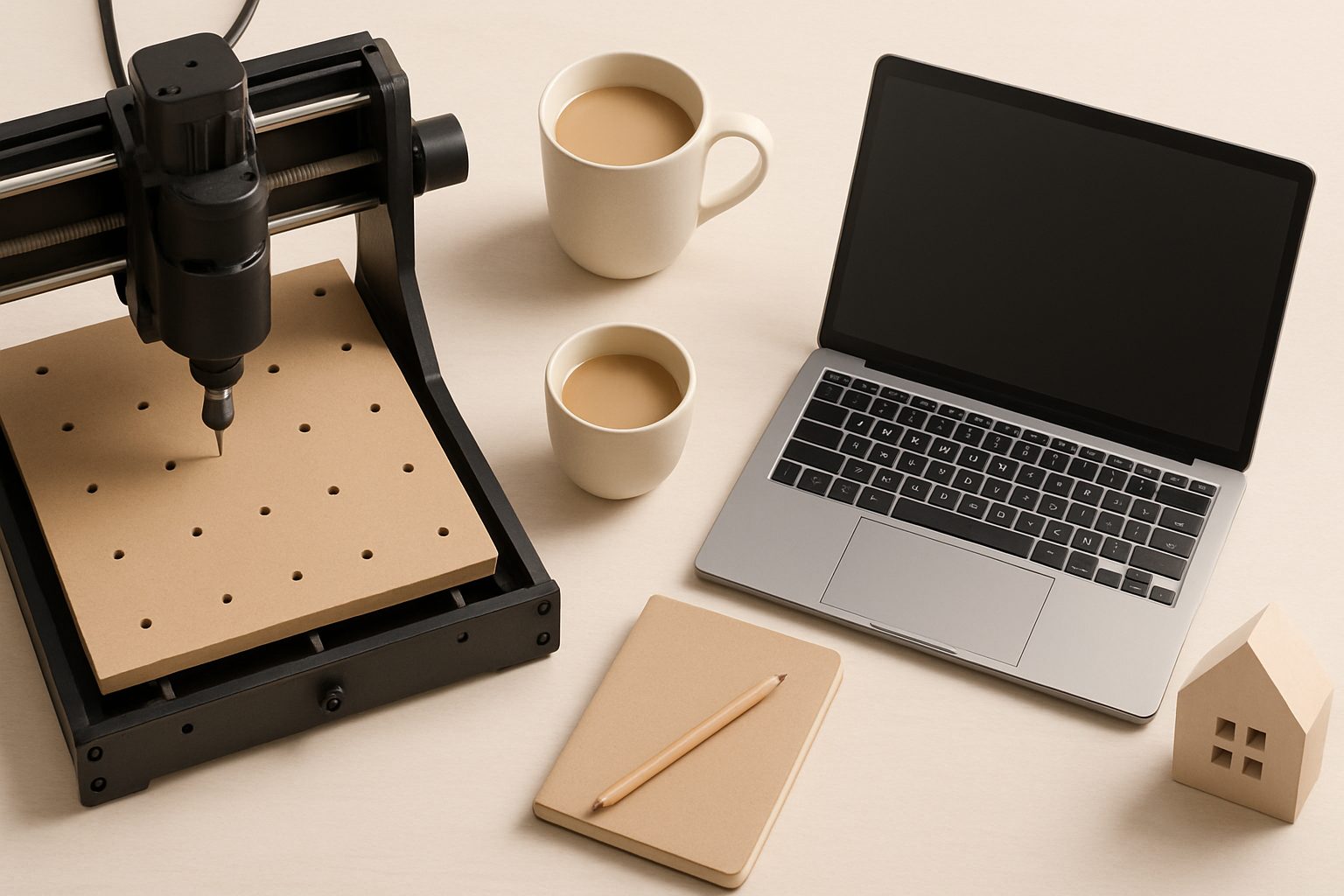
Best CNC Routers Under £500 UK: Cheap Machines That Actually Work
If you're curious about CNC routing but don't have thousands to spend, sub-£500 desktop models have matured enough to deliver real results. You won't get the precision of a £5,000 machine or the rigidity of industrial kit, but you will be able to cut wood, soft plastics, and composites with respectable accuracy. The catch is knowing what limitations you're accepting.
What You're Actually Buying at This Price
Budget desktop CNC routers are almost exclusively desktop-sized machines with working areas between 300×300mm and 500×500mm. They typically use spindle motors rated 2–3kW (though actual cutting power is modest), and almost all come from Chinese manufacturers sold through UK retailers like Amazon or specialist suppliers.
The fundamental compromise: you're trading precision, rigidity, and speed for affordability. A £500 machine will flex slightly under load, move slower than pricier alternatives, and may need calibration adjustments after a few months. That's not a defect—it's the trade-off. Accepting this upfront saves endless frustration.
Most sub-£500 models use either fixed spindles with external water cooling or simpler air-cooled variants. The fixed spindles are less convenient but perform adequately for hobby and small-business work. Dust collection on budget machines ranges from adequate to poor; you'll likely need to add aftermarket solutions.
The Sainsmart Genmitsu Range: The Safest Bet
The Sainsmart Genmitsu 3018-PRO is arguably the most reliable sub-£400 option in the UK market. It's a 300×180mm working area desktop router that handles wood, acrylic, and soft aluminium reasonably well. The 2.2kW spindle is adequate for light production runs, and the software (Lightburn/LaserGRBL compatible, though it's a router not a laser) has a gentler learning curve than some rivals.
Real users report:
- Acceptable repeatability for sign-making and hobby projects
- Noticeable deflection under aggressive feeds, so you learn to cut slower
- Reliable after bed-levelling and spindle runout compensation
- Moderate noise and vibration
The 5005-PRO variant offers a larger 500×300mm bed and is still hovering near the £500 mark during sales. If you plan anything beyond A4-sized pieces, the extra £60–80 is worth considering.
The main downside: customer support and spare parts availability in the UK is inconsistent, though Sainsmart has improved this in recent years.
Chinese Import Models: Cheaper but Sketchier
Dozens of unbranded Chinese desktop routers flood marketplaces at £200–350. They're mechanically similar to the Genmitsu but lack the support infrastructure. You'll find them under names like MYSWEETY, YOFULY, or generic listings simply titled "3018 CNC Router."
Pros: If one dies, a replacement costs less than you'd spend on repairs for a mid-range machine.
Cons: Documentation is often poor, spare parts are harder to source, and build quality varies wildly between batches. Some arrive with loose belts or misaligned spindles. That said, they can work if you're willing to troubleshoot.
This route suits people who treat their first CNC as disposable while they learn, or who are genuinely confident in mechanical debugging.
Real Limitations You'll Hit
Precision. These machines will hold ±0.5mm across a full job, not ±0.1mm. If you're cutting intricate dovetails or need mirror-matched parts, budget CNC will frustrate you. They're better suited to decorative work, batch signage, or prototyping.
Speed. A professional machine cuts wood at 100–200mm/min; budget routers typically run 30–80mm/min safely. Your projects take longer, and small production runs become tedious.
Material limits. Hardwoods beyond 15mm thickness require multiple passes and patience. Metals are generally off the menu—soft aluminium is the absolute upper boundary, and even that requires careful feed rates and coolant. Anything harder than mild steel will break the tool or stall the spindle.
Noise and dust. These machines are loud enough to be irritating in a shared workshop, and standard dust collection ports are undersized. Budget an additional £30–80 for a proper shroud and dust-extractor connector.
Software. Most sub-£500 machines use GrblControl, Lightburn, or simple G-code loaders. They're usable but less polished than professional CAM software. Expect a learning curve.
Who Should Buy Sub-£500 CNC?
These machines make sense if you:
- Want to experiment with CNC before committing thousands
- Run a small business cutting personalised gifts, signage, or simple wooden products
- Need occasional routing for hobby projects
- Can tolerate slower turnaround and calibration management
They're a poor fit if you:
- Need production-grade repeatability
- Work primarily with metals
- Plan full-time high-volume cutting
- Value convenience over cost
The Honest Bottom Line
A £500 CNC router won't rival a five-figure Haas or even a £2,000 dedicated machine. But it's capable enough to cut parts that matter, deliver passable quality, and teach you how CNC actually works. The Sainsmart Genmitsu 3018-PRO is your best first choice for reliability; Chinese imports work if you're mechanically confident and patient.
Budget your first three months for bed levelling, spindle runout compensation, and learning proper feed rates. The machine itself is the cheapest part of the setup—add cooling, dust collection, quality endmills, and a workholding solution, and you're closer to £800 total. That's still reasonable for serious hobby work or a small side business.
Start with softwood and acrylic to dial in technique, then expand into harder materials as you gain confidence. And be realistic: if a cheap CNC breaks after two years of regular use, you've had your money's worth.
More options
- Genmitsu CNC Routers (SainSmart range) (Amazon UK)
- Shapeoko CNC Router & Accessories (Amazon UK)
- CNC Router End Mill & Bit Sets (Amazon UK)
- CNC Spindle Kits & VFD Controllers (Amazon UK)
- BobsCNC Evolution 4 & Accessories (Amazon UK)